Most medtech leadership pipelines are working exactly as intended, and that is why they so often miss the leaders who matter most.
They are not broken, under-resourced, or poorly run. In many cases, they are carefully designed systems built to reduce risk, move efficiently, and surface candidates who feel safe to appoint. That intention makes sense, particularly in regulated environments where decisions are scrutinised and mistakes carry real consequences.
What Leadership Pipelines Are Really Optimised For
These pipelines tend to reward leaders who interview well and communicate confidently. They favour career stories that map neatly onto the organisation’s current architecture and way of working. Experience from familiar companies and recognisable roles feels reassuring, especially when boards and executives must justify decisions under pressure. On paper, these signals reduce uncertainty and make leadership appointments feel rational, defensible, and safe.
The unintended consequence is easy to miss. Leaders who have already navigated complexity that has not yet arrived often do not signal themselves in ways these systems can easily recognise. That complexity might involve regulatory inflection points, scaling constraints, or future market access challenges. Their experience is rarely linear and is harder to summarise on paper. It is shaped by context, judgement, and timing rather than by titles alone. As a result, they are filtered out early, not because they lack capability, but because their value resists standardisation.
This is where leadership pipelines begin to drift away from long-term outcomes. They optimise for clarity today because clarity feels like control. Yet in medtech, the future rarely arrives neatly. The leaders who matter most are often the ones who can see around corners, long before the corner appears.
When the Environment Changes Faster Than Hiring Models
This tension has only intensified over time. Technology has continued to advance at extraordinary speed, while the cost, complexity, and regulation of bringing products to market have moved in the opposite direction. In medtech, progress is no longer linear. The leaders who thrive are not simply those who build faster, but those who can navigate slowing approval cycles, rising scrutiny, and compounding complexity at the same time.
This is why some technically brilliant products still struggle to scale. Not because the technology fails, but because early leadership decisions hard-code assumptions that later collide with regulation, clinical reality, or market access requirements. By the time those constraints surface, the architecture is set, the team is committed, and the cost of change is no longer theoretical.
In those moments, organisations discover that speed without foresight can be just as limiting as caution without ambition. What once felt like momentum becomes friction, and what looked like progress quietly narrows the range of viable paths forward.
The leaders who help organisations avoid these traps rarely look obvious at first glance. They tend to carry experience shaped by failed assumptions, regulatory negotiation, clinical trade-offs, and moments where progress slowed for good reason. That kind of judgement is difficult to compress into a CV and even harder to assess in interviews designed for clarity and speed.
As a result, leadership pipelines quietly prioritise those who can explain what they have built, rather than those who understand what should not be built yet. The distinction is subtle, but in MedTech it often determines whether a product simply launches or truly endures.
The Leadership Question That Matters Now
The more useful question, then, is not whether a candidate looks strong on paper. It is whether they have already wrestled with the kinds of constraints your organisation has yet to encounter. Whether they have learned when to move fast, when to slow down, and when not to build at all.
For medtech leaders, this is less about hiring for excellence in isolation and more about hiring for judgement under pressure. The ability to anticipate regulatory friction, clinical complexity, and second-order consequences often matters more than raw speed or visible momentum. These qualities rarely announce themselves clearly, yet they shape outcomes long after the appointment is made.
Leadership pipelines that surface this kind of judgement tend to look different. They rely less on volume and visibility, and more on context, trust, and pattern recognition built over time. Not because this approach is fashionable, but because the environment now demands it.
This is why many organisations sense that their hiring processes are no longer enough, even when those processes appear rigorous. The system has not failed. The world has changed.
That shift raises a final, uncomfortable question worth sitting with as you look ahead. If the leaders who help you navigate what comes next are the hardest to see, how are you ensuring they ever come into view?
#MedTech #TechLeadership #CTO #LeadershipStrategy #ExecutiveHiring
Frequently Asked Questions
Is this about hiring mistakes we’ve already made?
Not necessarily. In many cases, these outcomes emerge from sensible decisions made under the right conditions at the time. The issue is less about fault and more about whether existing systems still fit today’s environment.
Does this apply if we already have strong technical leadership in place?
Yes. Leadership pipelines shape succession, principal engineering hires, and future capability long before a role formally opens. The blind spot often appears upstream, not at the point of appointment.
Are you suggesting traditional hiring processes no longer work?
They still work for roles where clarity and comparability are sufficient. The challenge arises when organisations need leaders who can anticipate regulatory, clinical, and market complexity that has not yet arrived.
What kind of roles are most affected by this blind spot?
Senior technical leadership roles where architectural decisions, regulatory strategy, and long-term scale intersect. CTO succession and principal engineering appointments are common examples.
What should leaders do differently right now?
Start by reframing the questions you ask. Instead of focusing solely on what candidates have built, explore what constraints they have already navigated and what trade-offs they have learned to recognise early.
What does this look like in practice for organisations like ours?
In practice, it often begins with a private, exploratory conversation rather than a formal search. Many CEOs and CTOs want to sense-check whether this blind spot exists in their organisation before committing to any hiring decision. Those conversations help clarify where leadership judgement, timing, and future risk intersect, long before a role is advertised or a shortlist is created.
About Harun Rabbani
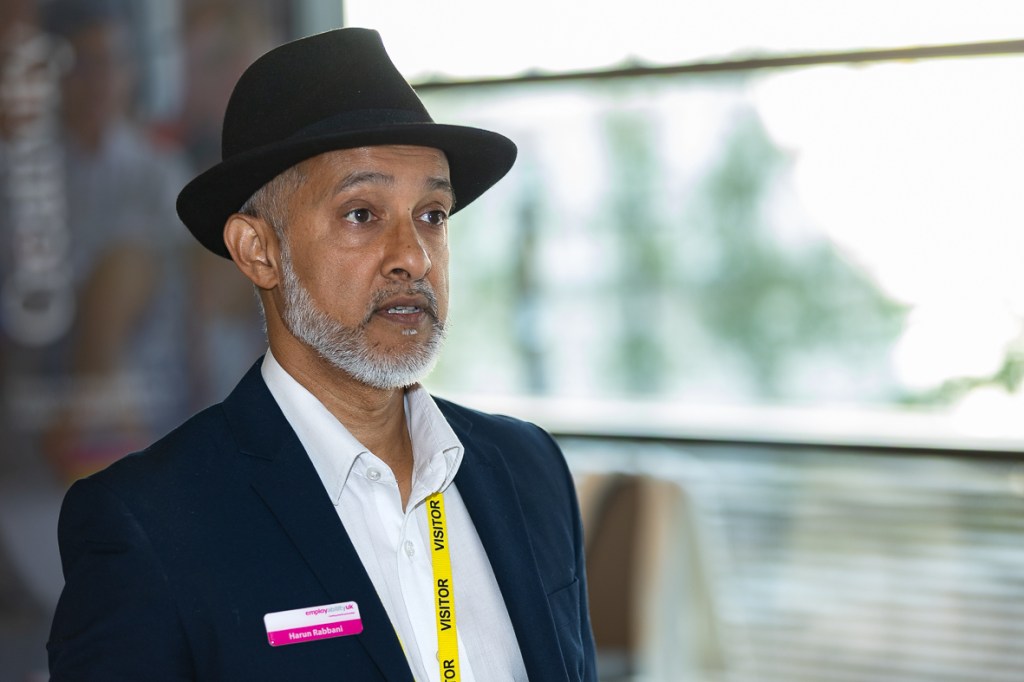
Harun works with MedTech organisations that understand how much their future depends on the calibre of senior technical leadership they bring in. His focus is not volume hiring, but helping CEOs and CTOs secure rare engineering minds who can thrive in complex, regulated environments where clinical, technical, and commercial realities collide.
Before advising on talent, Harun spent years inside the medical devices and surgical endoscopy world with Olympus KeyMed, Gyrus International, and Microsulis. He saw firsthand how mastery can look effortless, and how the right technical decisions quietly protect patient outcomes. Later, he placed PhD-level scientists into biotech and pharmaceutical roles, giving him a deep appreciation of how scientific and engineering minds perform under pressure.
Today, Harun operates as a trusted advisor to senior leaders, partnering through discreet conversations, long-term relationships, and values-led stewardship. His role goes beyond identifying hidden talent. He helps organisations integrate senior engineers in ways that strengthen culture, accelerate innovation, and protect the integrity of the teams they lead.
Harun believes leadership is not just about who you hire, but who you fail to see.
Want to work with Harun? DM him on LinkedIn:

 Harun Rabbani
Leave a comment